
In honour of World Wildlife Day, the 3rd March 2025, our lovely volunteer Ellie Prebble has shared some information about one of her favourite animals, the seahorse! Read on to learn more about these fascinating little creatures and how they need to be protected.
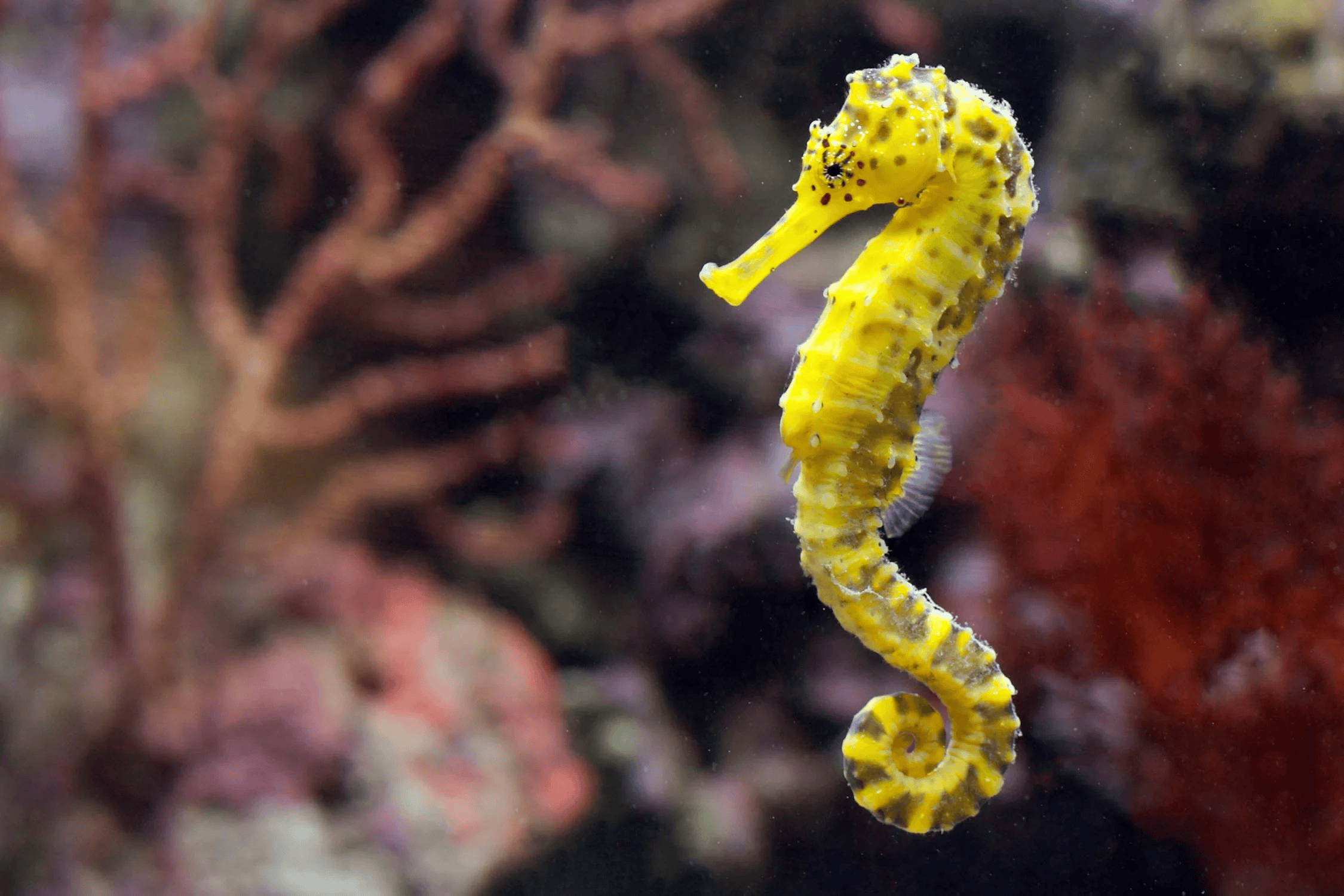
Ranging from 2-35 cm in length, seahorses inhabit the shallow coastal waters of a large range of temperate and tropical coastal habitats, including the UK. They belong to the order Syngnathiformes, which contains a wide variety of rather unusual looking sea creatures, including sea dragons and pipe fish. Their appearance is not their only unique characteristic, however.
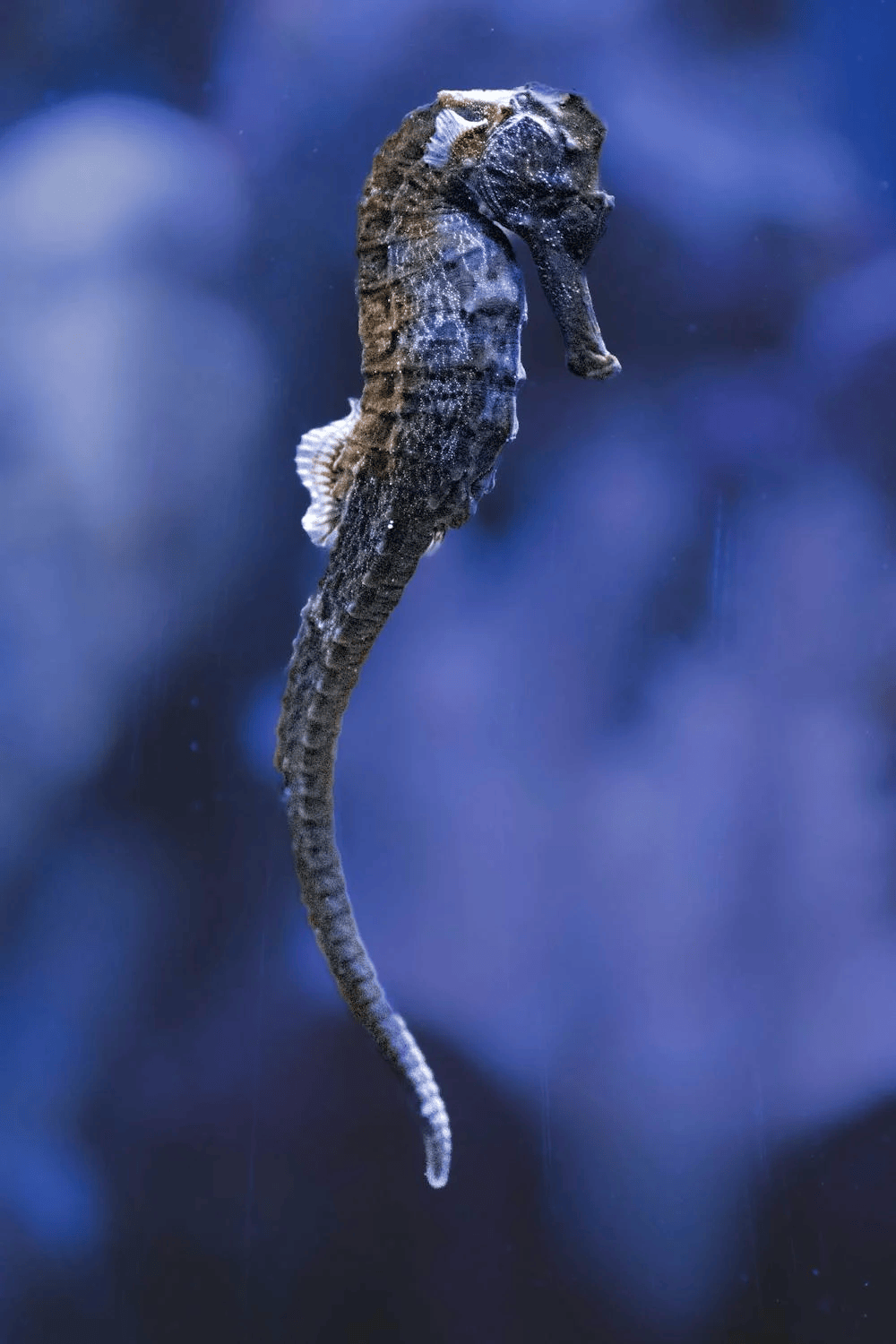
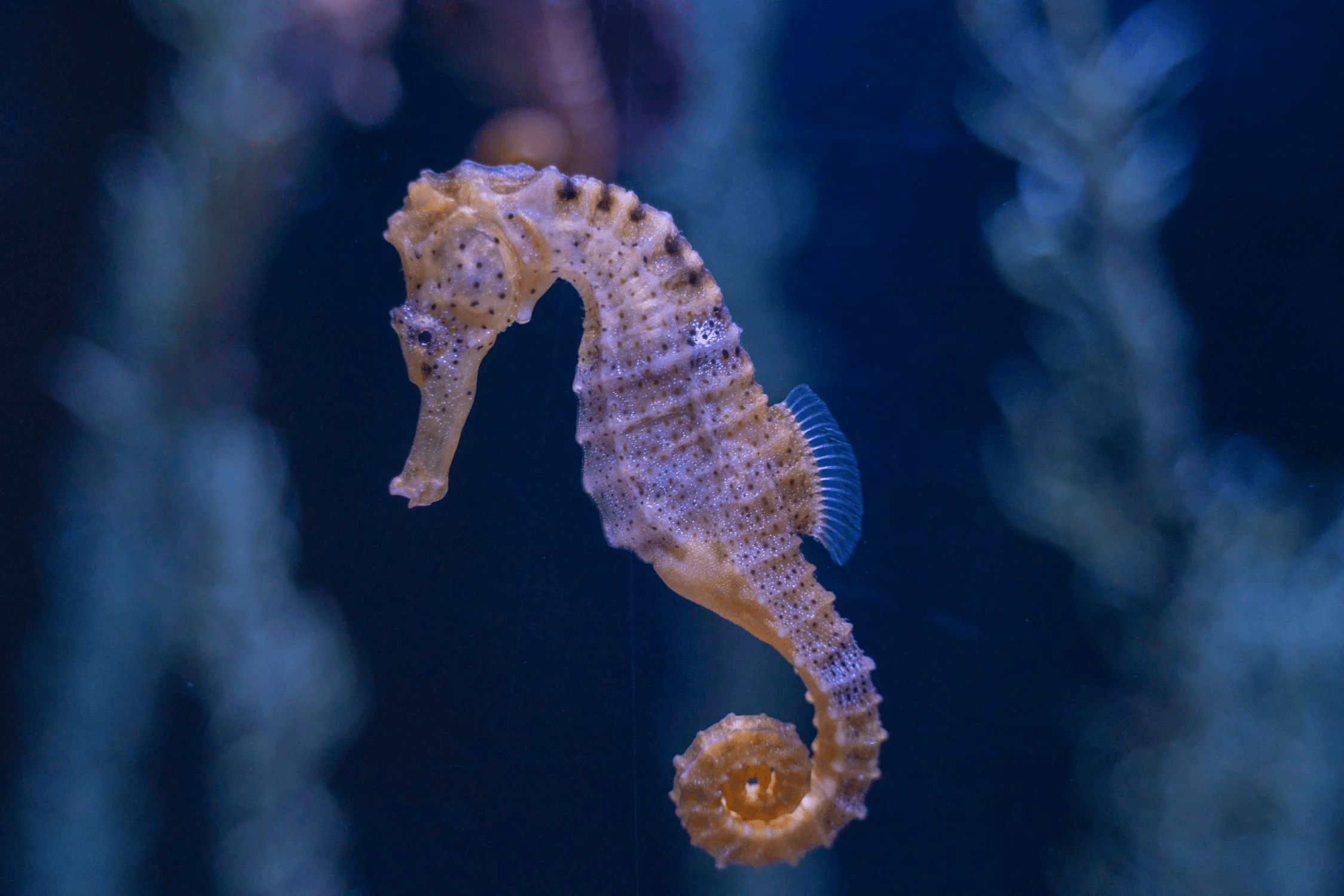
Seahorses swim upright using fins on their back, and this orientation creates a large surface area and therefore drag in the water. This means they are not strong swimmers, but they were not evolved to be. As the Australian and New Guinea tectonic plates moved northward and collided with the Eurasian plate around 25 million years ago, shallow waters became more abundant and were populated by ecosystems supported by coral and sea grasses. In these new calmer waters, large fins were swapped for a long neck and mouth for the stealthy swallowing of small crustaceans which cross their path, rather than speedy chases. This opportunistic style of hunting means seahorses are constantly eating or on the lookout for food. This is aided by their ability to camouflage themselves and their excellent eyesight; their eyes can move independently, giving them a nearly panoramic view of their surroundings!
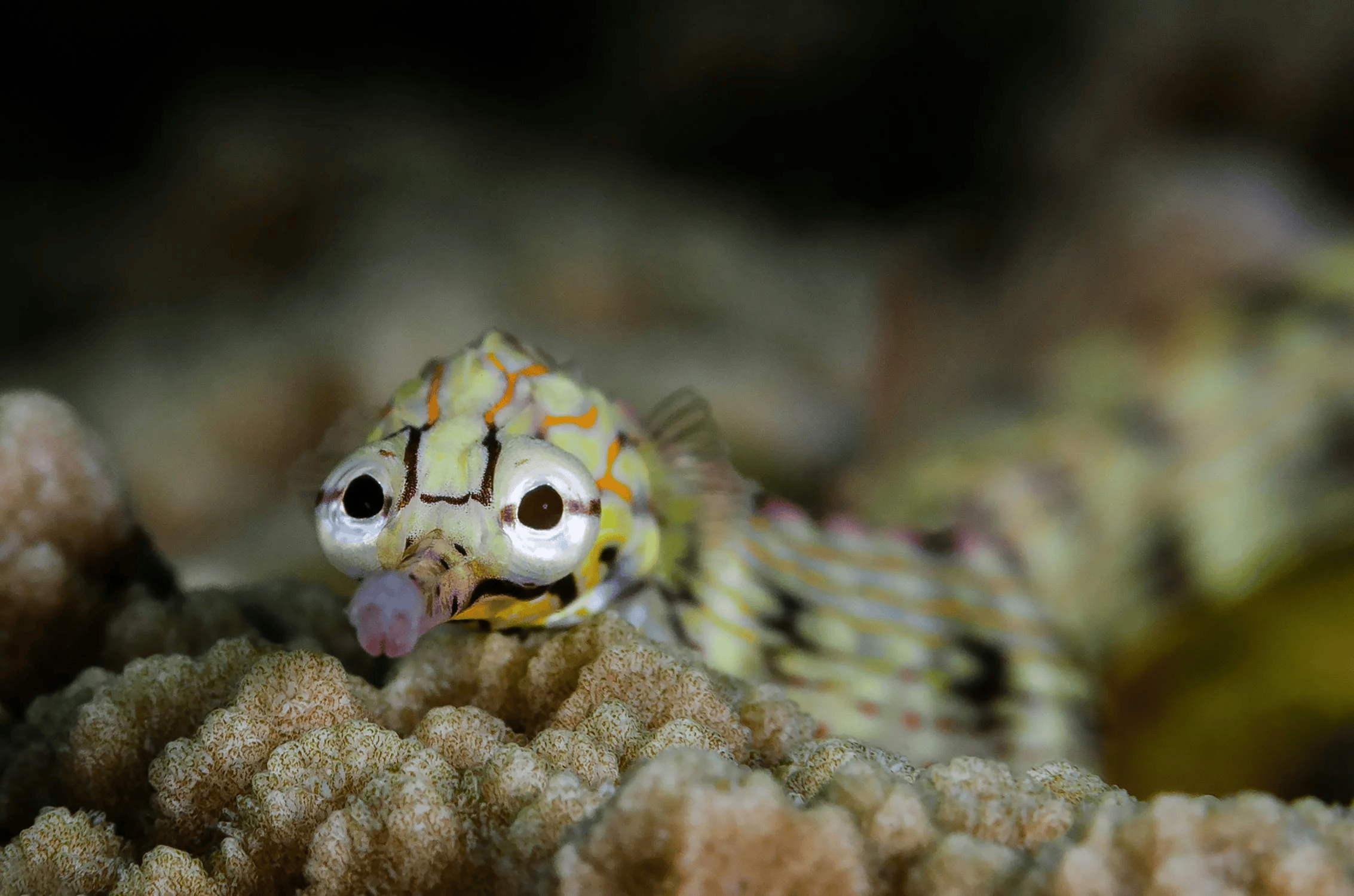
Another interesting element of seahorses are their tails, which are a rare square shape to increase the surface area available to grip. This adaptation helps them anchor themselves to sea grass in waters with stronger currents where shrimp are found, and is also beneficial in avoiding being eaten by predators, alongside their bony exoskeleton and camouflage capabilities. Many social interactions rely on the tail too, with babies intertwining themselves and looking for food together, or adults curling their tails together when greeting or mating.
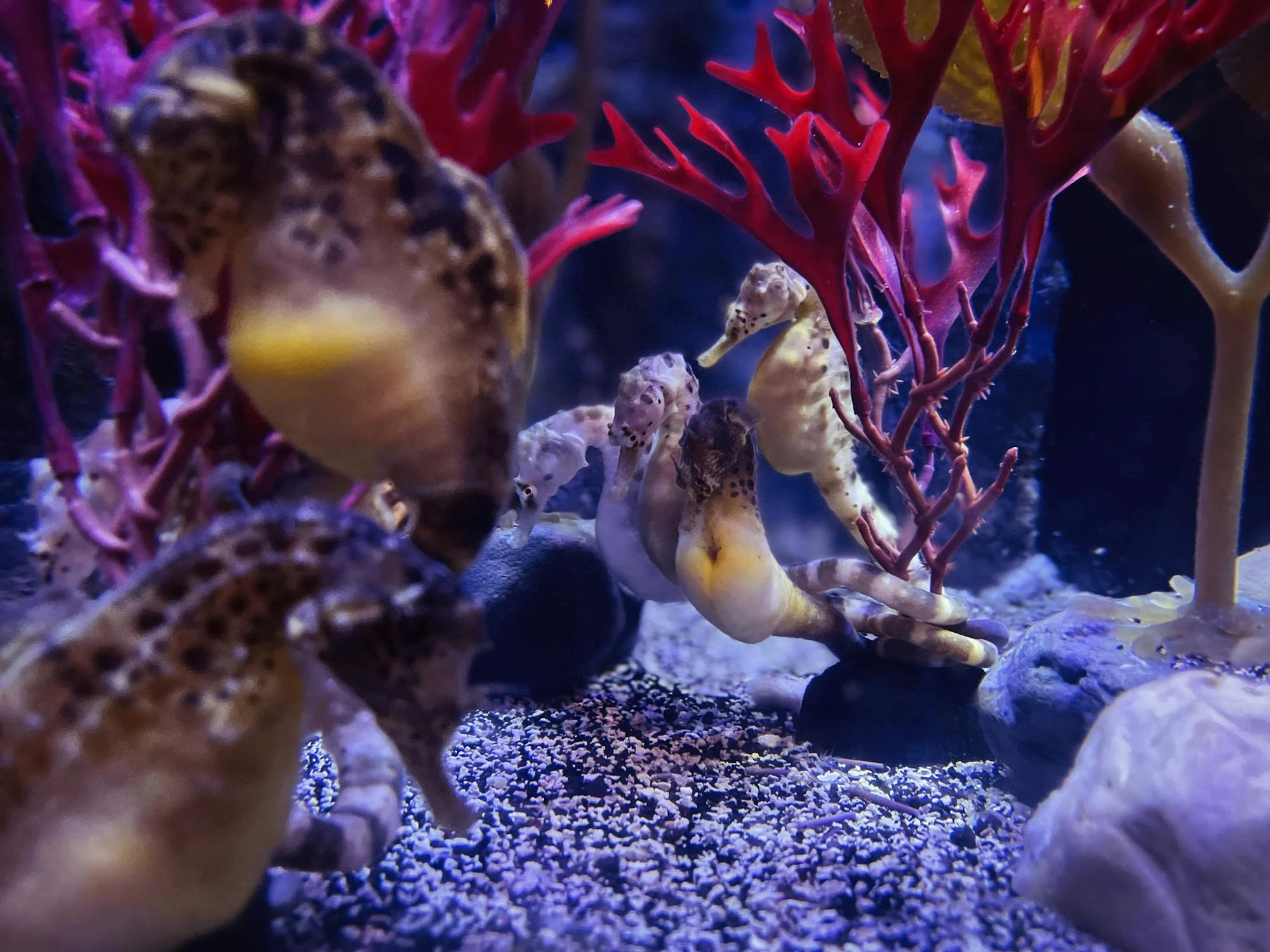
The reproductive process following these interactions is also unusual compared to other animals. Alongside sea dragons, they are the only species where the male carries the embryos once the female has transferred her eggs to him. As seahorse babies are completely independent after birth, survival rates are very low, and therefore up to 2000 offspring are born at one time! Having the male give birth makes breeding more efficient, as the female can produce more eggs whilst the male carries the fertilised ones. Males can also carry embryos produced from eggs from different females, increasing diversity in the seahorse population.
Although they are widespread, at least one third of all seahorse species are threatened, including the two species which are found in the UK – White’s seahorse and the Cape seahorse. This risk comes from various human activities. Shallow waters are particularly sensitive to climate change, meaning higher sea levels and warming waters are already having devastating impacts on their coral and seagrass habitats, alongside pollution. 70 million seahorses are captured each year, either as bycatch in commercial fishing, or intentionally as part of the seahorse trade.
These unique and mysterious animals deserve our protection in the face of the extreme environmental change we have caused, and organisations such as Project Seahorse and The Seahorse Trust work to protect them by pushing for legislation on protected areas, fishing regulations, and the trade industry.